
Low vitamin D is so common that many clinicians consider it the rule rather than the exception, especially in winter and in people who spend most of their day indoors. The reassuring part: it is straightforward to measure, easy to understand once you see the chart, and usually simple to correct.
What the vitamin D test measures
The standard test measures 25-hydroxy vitamin D, written as 25(OH)D. This is the storage form of vitamin D and the best single indicator of your overall vitamin D status — it reflects what you get from both sunlight and diet, and it stays relatively stable over weeks.
You may see it reported in ng/mL (common in the US) or nmol/L (common elsewhere). The numbers look very different — 1 ng/mL equals about 2.5 nmol/L — so always check which unit your report uses before comparing to any chart.
The vitamin D chart
Here is the chart in both units. Find the column that matches your report, then read across.
| Vitamin D (ng/mL) | nmol/L | Status | What it generally means |
|---|---|---|---|
| Below 12 | Below 30 | Deficient | Linked to soft, weak bones (rickets in children, osteomalacia in adults). |
| 12 to 19 | 30 to 49 | Inadequate | Generally too low for bone and overall health in many people. |
| 20 to 50 | 50 to 125 | Adequate | Generally enough for bone and overall health in healthy people. |
| Above 50 | Above 125 | Higher than needed | Linked to potential harm, especially above 60 ng/mL (150 nmol/L). More is not better. |
Status bands from the NIH Office of Dietary Supplements. To convert, multiply ng/mL by 2.5 to get nmol/L, or multiply nmol/L by 0.4 to get ng/mL.
Why your lab report may use different numbers
Many U.S. labs print a reference range of 30 to 100 ng/mL and flag anything under 30 as low or insufficient. That range comes from a 2011 Endocrine Society guideline, which called below 20 ng/mL deficient and 21 to 29 insufficient. In 2024, the Endocrine Society stopped endorsing 30 ng/mL as a target and advised against routine vitamin D testing for most healthy adults. Experts still do not fully agree, so ask your doctor which target fits you.
More is not always better. Very high levels, almost always from over-supplementation rather than sun or food, can cause problems. The goal is comfortably adequate, not maximal.
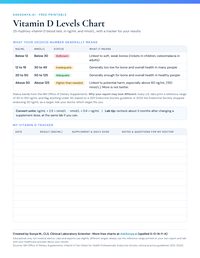 Free printable · PDFVitamin D Levels ChartOne page in ng/mL and nmol/L, with a tracker for your results.
Download free
Why so many people run low
Vitamin D is unusual in that your skin makes most of it from sunlight, so modern life works against it:
- Limited sun exposure — indoor work, sunscreen, and northern latitudes all reduce production
- Winter months, when the sun sits too low to trigger much synthesis
- Darker skin, which needs more sun exposure to make the same amount
- Age, since skin becomes less efficient at producing it over time
- Excess weight, which sequesters vitamin D in fat tissue
- Few dietary sources — fatty fish and fortified foods are among the only meaningful ones
What the number guides you to do
Your level shapes the approach, which your doctor will tailor to you:
- Deficient levels often prompt a higher correction dose for a period, followed by a maintenance dose and a recheck.
- Insufficient levels are usually addressed with a daily maintenance supplement and attention to sun and diet.
- Sufficient levels generally just need maintenance, especially through winter.
Because vitamin D is fat-soluble and stored, it is one of the few vitamins where testing before and after supplementing genuinely helps — it prevents both under-treating and overshooting. A recheck in about three months is common.
Frequently asked questions
What is a good vitamin D level?
For most healthy people, the NIH considers a 25-hydroxy vitamin D level of 20 ng/mL (50 nmol/L) or higher adequate for bone and overall health, and levels below 12 ng/mL (30 nmol/L) deficient. Many lab reports use a stricter range of 30 to 100 ng/mL and flag anything under 30. Experts do not fully agree, so ask your doctor which target fits you. Because units vary between labs, check whether your result is in ng/mL or nmol/L before comparing it to any chart, since the same status looks like very different numbers.
What are the symptoms of low vitamin D?
Low vitamin D is often silent, especially at first, which is why it is usually caught on a blood test rather than by symptoms. When symptoms do appear, they can include fatigue, muscle weakness or aches, bone discomfort, and low mood — but these are nonspecific and overlap with many other conditions, so they cannot confirm a deficiency on their own. That nonspecific quality is exactly why measuring the level matters. If you have these symptoms, a simple blood test can tell you whether vitamin D is part of the picture.
How much vitamin D should I take?
The right dose depends on your current level, so this is best decided with your doctor after testing. Deficient levels often call for a higher correction dose for a limited period, followed by a lower maintenance dose, while insufficient levels usually need a steady daily maintenance amount. Because vitamin D is fat-soluble and stored in the body, taking large doses without knowing your level can lead to overshooting. Testing before and after supplementing is genuinely useful here, and a recheck after about three months confirms you have landed in the right range.
Can vitamin D be too high?
Yes. Because vitamin D is fat-soluble and stored rather than excreted, it can build up to harmful levels, though this almost always comes from excessive supplementation rather than from sun or food. The NIH links levels above 50 ng/mL (125 nmol/L) to potential adverse effects, especially above 60 ng/mL (150 nmol/L), and true toxicity can raise blood calcium. This is why the goal is a comfortably sufficient level rather than the highest possible number, and why doctors recheck after starting higher doses. Sunlight does not cause toxicity, since the body self-regulates how much it makes.
Why is my vitamin D low even though I go outside?
Several factors can keep vitamin D low despite time outdoors. Sunscreen, clothing, glass windows, and being outside when the sun is low all reduce how much your skin produces. Latitude and season matter greatly — in winter and at northern latitudes, the sun is often too low to trigger meaningful synthesis at all. Darker skin needs more exposure to make the same amount, skin becomes less efficient with age, and excess weight sequesters vitamin D in fat tissue. Diet rarely fills the gap, since few foods contain much. This combination is why levels run low even in people who feel they get plenty of sun.
As an Amazon Associate, AskSonya.ai earns from qualifying purchases made through book links on this page — at no extra cost to you.
Go deeper in Sonya's books
These titles cover your lab results and what they mean in full detail.
Wondering what your vitamin D level means for you?
Ask Sonya — the AI health guide grounded in clinical laboratory science. Upload your report or paste a value and get a plain-language explanation in seconds.