
eGFR appears on almost every basic or comprehensive metabolic panel, often right under creatinine. Because it comes with stage names that sound alarming, a single low number can cause a lot of worry. The chart below shows what each range means, and the sections after it explain why context matters so much.
What eGFR measures
eGFR stands for estimated glomerular filtration rate: roughly how much blood your kidneys clean each minute, adjusted to a standard body size. The unit is mL/min/1.73 m².
It is calculated, not measured directly. The lab takes your blood creatinine (a waste product from muscle) and plugs it into an equation with your age and sex. Most U.S. labs now use the 2021 CKD-EPI equation, which no longer uses race. Some labs also use cystatin C, a second blood marker, to confirm the estimate.
The eGFR chart
Kidney function is grouped into stages, from G1 (normal or high) to G5 (kidney failure):
| Stage | eGFR (mL/min/1.73 m²) | What it means |
|---|---|---|
| G1 | 90 or higher | Normal or high |
| G2 | 60 to 89 | Mildly decreased, which is common with age |
| G3a | 45 to 59 | Mildly to moderately decreased |
| G3b | 30 to 44 | Moderately to severely decreased |
| G4 | 15 to 29 | Severely decreased |
| G5 | Below 15 | Kidney failure |
KDIGO GFR categories, as published by the National Kidney Foundation. G1 and G2 count as chronic kidney disease only when there are other signs of kidney damage.
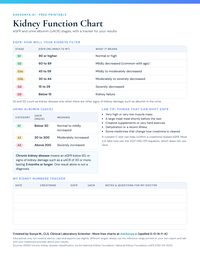 Free printable · PDFKidney Function (eGFR) CharteGFR and urine albumin stages on one page, with a tracker for your results.
Download free
eGFR is only half the picture: urine albumin
Healthy kidneys keep protein in the blood. When the filters are damaged, a protein called albumin leaks into the urine, sometimes years before eGFR drops. That is why kidney checkups often include a urine albumin-to-creatinine ratio (uACR):
| Category | uACR (mg/g) | What it means |
|---|---|---|
| A1 | Below 30 | Normal to mildly increased |
| A2 | 30 to 300 | Moderately increased |
| A3 | Above 300 | Severely increased |
KDIGO albuminuria categories, as published by the National Kidney Foundation.
Doctors look at both numbers together. Someone with an eGFR of 75 and a uACR of 250 may need more attention than someone with an eGFR of 58 and no albumin in the urine.
What counts as chronic kidney disease
Chronic kidney disease (CKD) means an eGFR below 60, or signs of kidney damage such as a uACR of 30 or more, that last three months or longer. That time rule matters: eGFR can dip for a few days with dehydration, illness, or a new medicine and then recover. One result on its own is a reason to recheck, not a diagnosis.
Creatinine comes from muscle, not just kidneys. Because eGFR is calculated from creatinine, anything that changes how much creatinine you make can move your eGFR even when your kidneys have not changed. A bodybuilder can look like they have reduced kidney function; a frail older adult with little muscle can look better than they are. When the number does not fit the person, a cystatin C test is a good next question to ask.
Things that can shift your eGFR
- Very high or very low muscle mass, including amputation or muscle-wasting illness
- A large meat meal in the hours before the test
- Creatine supplements or very hard exercise shortly before the draw
- Dehydration, vomiting, diarrhea, or a recent illness
- Some medicines that change how the kidneys clear creatinine
eGFR also tends to drift down with age, so a result in the 60s can be common in older adults without kidney disease, especially when urine albumin is normal.
Frequently asked questions
What is a normal eGFR?
An eGFR of 90 or higher is considered normal or high. An eGFR of 60 to 89 is mildly decreased, which is common with age and does not count as kidney disease unless there are other signs of kidney damage, such as albumin in the urine. Many labs show results above 60 as within range. Always compare with the range printed on your own report.
Is an eGFR of 55 bad?
An eGFR of 55 falls in stage G3a, which means mildly to moderately decreased kidney function. It counts as chronic kidney disease only if it stays below 60 for three months or longer, so the usual next step is a repeat test along with a urine albumin (uACR) test. Many people in this range stay stable for years, especially when blood pressure and blood sugar are well controlled.
Can eGFR go back up?
Yes. eGFR can dip temporarily from dehydration, a recent illness, a heavy meat meal, hard exercise, or certain medicines, and then return to your usual level. That is why a single low result is rechecked before any diagnosis is made. A steady decline over months or years is what doctors watch most closely.
What is the difference between creatinine and eGFR?
Creatinine is the actual blood test: a waste product from your muscles that healthy kidneys filter out. eGFR is a calculation that uses your creatinine, age, and sex to estimate how well your kidneys filter. When creatinine goes up, eGFR goes down. Because creatinine depends on muscle mass, a cystatin C test is sometimes used to confirm the estimate.
As an Amazon Associate, AskSonya.ai earns from qualifying purchases made through book links on this page, and may earn an Audible referral bonus, at no extra cost to you.
Go deeper in Sonya's books
These titles explain how to read kidney labs and other markers for long-term conditions.
Want help reading your kidney results?
Ask Sonya, the AI health guide grounded in clinical laboratory science. Upload your report or paste a value and get a plain-language explanation in seconds.